By Michael Phillips | Sports & Whatever | Golf
Good Good Golf spent six years building the kind of brand every legacy golf company wished it had — a scrappy YouTube channel out of Frisco, Texas that turned into a $45 million-funded media company with Callaway co-branded clubs, shelf space at Dick’s Sporting Goods, a Golf Channel series, and 2.1 million subscribers who treated founders Garrett Clark and Matt Kendrick like the cool older brothers of internet golf.
It took about 72 hours to blow most of that up.
The Ad
Last week, Good Good and Callaway released a promo for their co-branded Quantum Driver. In it, Good Good personality Alexis Miestowski reaches for the new club. Co-founder Garrett Clark shoulder-checks her to the ground, stands over her, and says, “Do not touch my new driver.”
Good Good pulled the ad within days, calling it something that “ultimately depicted actions that are not aligned with our values as a brand.” Callaway, which had reposted the spot to its own channels, pulled it too.
Here’s the part that makes this stranger than your average bad-ad blowup: Kendrick says the full 60-second cut was meant to spoof “Obsession,” the 2026 horror hit from 26-year-old YouTuber-turned-director Curry Barker. It was a genre bit. A man violently shoving a woman to the ground and standing over her, dressed up as a horror-movie homage, to sell a driver.
Nobody in the edit bay stopped to ask how that clip would look with zero context, stripped of the “Obsession” reference, autoplaying on someone’s phone. Nobody did until it was already out.
The Reckoning
The backlash was immediate, and it did not stay online. PGA Tour CEO Brian Rolapp called the ad “concerning” and “clearly not aligned with PGA Tour values.” Clark posted a video apology Wednesday night, saying “this is not, at all, what we stand for,” and that he doesn’t “support (domestic violence), abuse or any of that.” Callaway CEO Chip Brewer admitted the company’s own approval process had failed: “That approval should never have happened. Mistakes were made, and we are taking the matter very seriously.”
The apologies didn’t slow anything down. On Thursday, within hours of each other:
- Callaway ended its three-year partnership with Good Good “effective immediately” and committed $1 million to organizations combating violence against women. The split came the day after Clark’s video apology — Callaway had co-developed the ad and reposted it to its own channels before pulling it down.
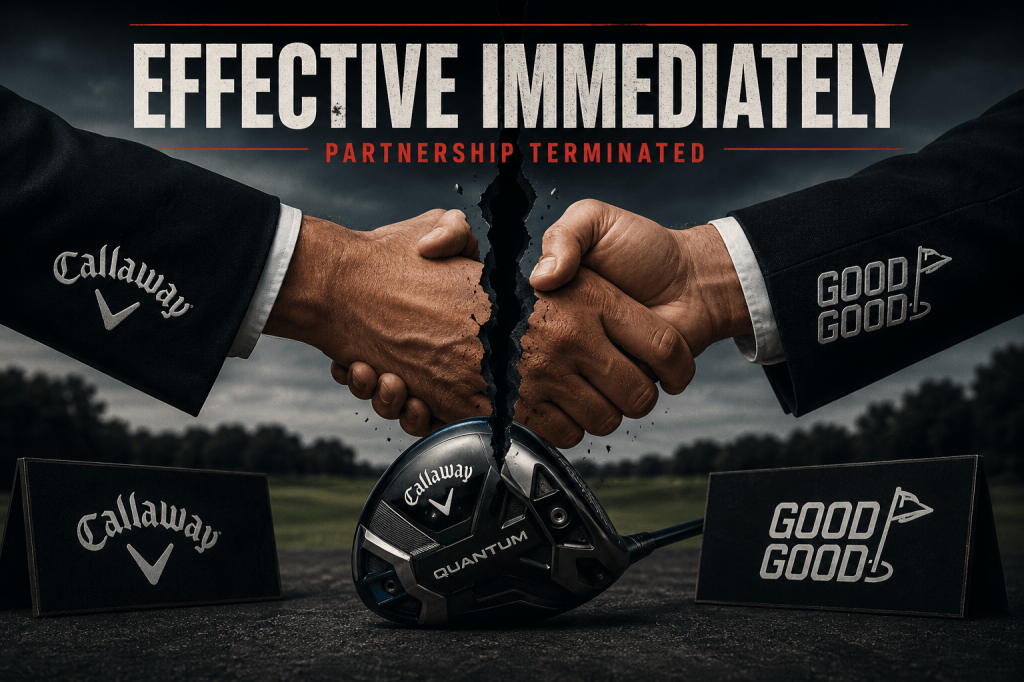
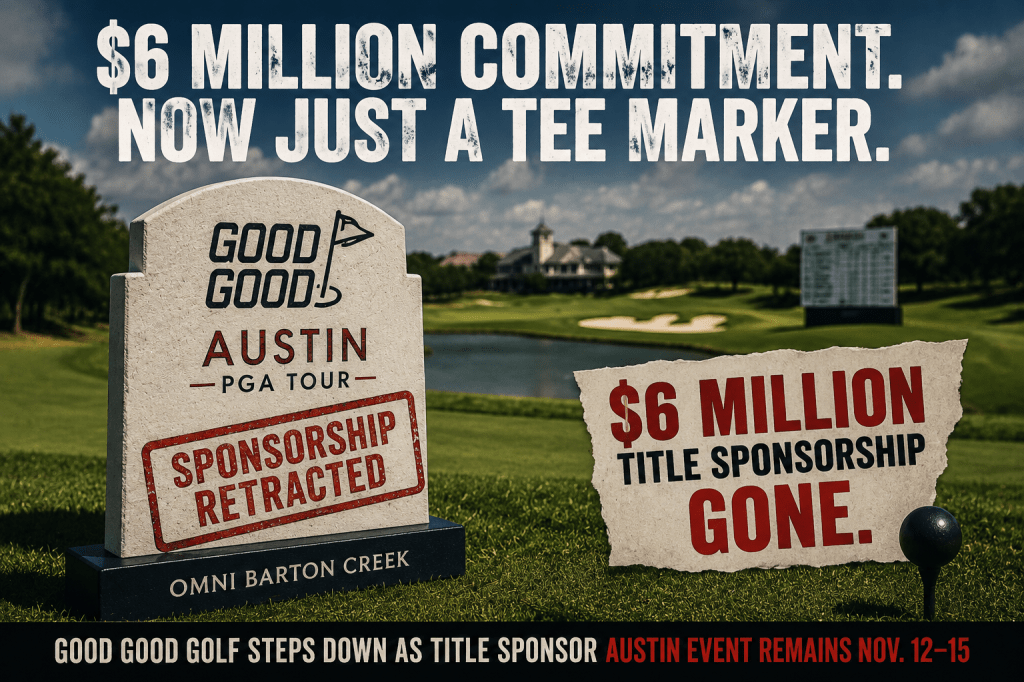
- Good Good stepped down as title sponsor of its own PGA Tour event in Austin, a reported $6 million commitment for the November stop at Omni Barton Creek. The tournament stays on the schedule November 12–15; it just doesn’t have Good Good’s name on it anymore.
- Good Good’s Golf Channel reality series was postponed after a sponsor asked to have its branding scrubbed from the telecast entirely.
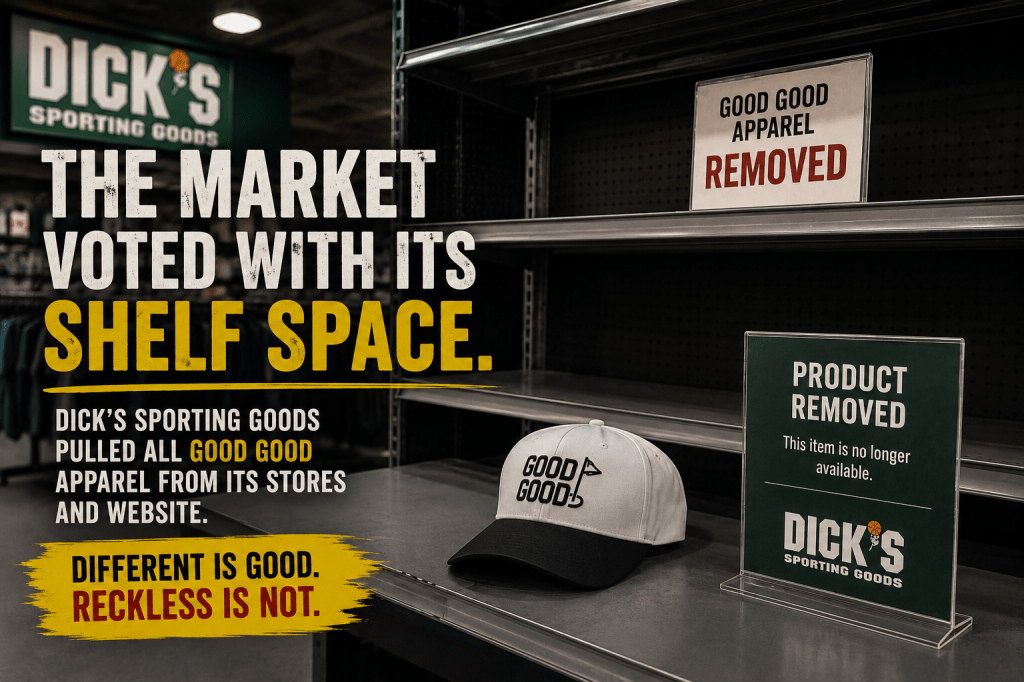
- Dick’s Sporting Goods pulled all Good Good apparel from its stores and website — the widest physical retail footprint the brand had.
“Four separate business relationships, four separate companies deciding independently that the math no longer worked.”
Four separate business relationships, four separate companies deciding independently that the math no longer worked. That’s not a coordinated pile-on. That’s what happens when a brand’s core partners each run their own risk assessment and land on the same answer.
What This Actually Is
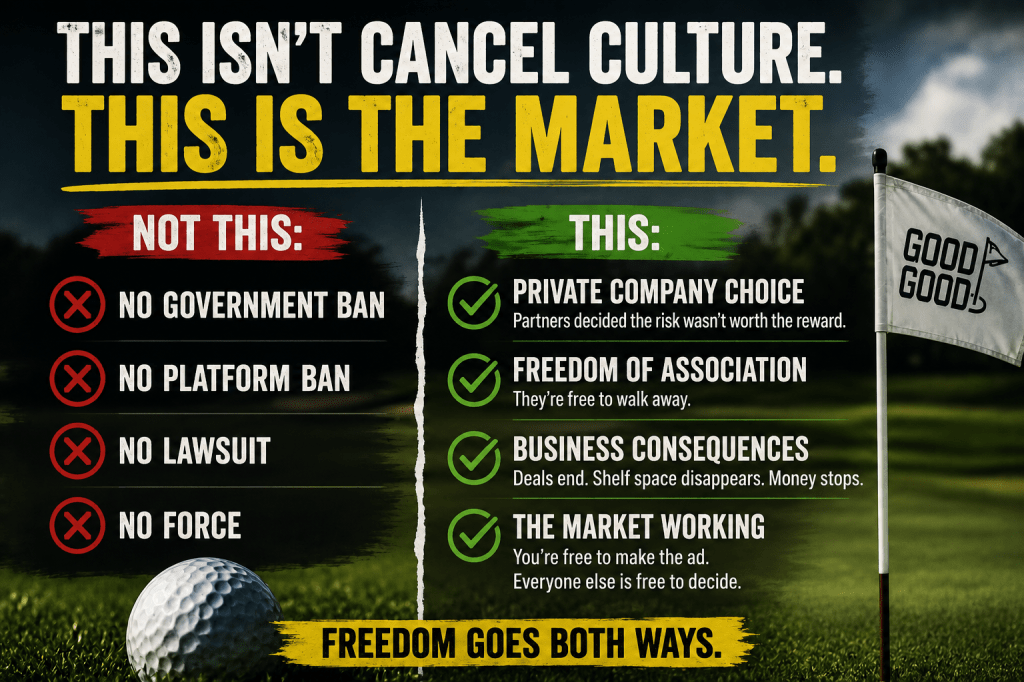
There’s a temptation to file this under “cancel culture,” and Clark leaned into some of that framing himself, thanking fans for their support and noting the “very, very valid points” raised amid what he also called unfair pile-on energy. But that framing doesn’t hold up against what actually happened here.
“That’s not censorship. That’s business partners exercising the same freedom of association that let Good Good sign those deals in the first place.”
Nobody got arrested. Nobody got banned from a platform. No government agency intervened. A private company made an ad depicting a man violently shoving a woman to the ground, and the companies that had put their names next to that ad — Callaway, the PGA Tour by extension, Dick’s, a Golf Channel sponsor — decided they didn’t want to be next to it anymore. That’s not censorship. That’s business partners exercising the same freedom of association that let Good Good sign those deals in the first place.
“‘Edgy’ implies a calculated risk that the audience will find provocative rather than repugnant.”
Companies are free to make edgy, boundary-pushing ads. That’s not in dispute, and plenty of brands do it successfully. But “edgy” implies a calculated risk that the audience will find provocative rather than repugnant. Good Good and Callaway miscalculated badly, and the ad wasn’t edgy in the ways their internet-native audience typically rewards — it was a scene of male-on-female violence, framed as comedy, sold as horror-movie homage, attached to a product launch. The market’s response wasn’t outrage-for-outrage’s-sake. It was Callaway’s own CEO admitting the approval process broke down, and every downstream partner deciding they didn’t need to inherit that mistake.
The Real Cost
The financial hit alone is significant — the Austin title sponsorship reportedly ran $6 million, and that’s before accounting for the Callaway partnership, the Dick’s shelf space, or a stalled TV deal. But the deeper cost is to the thing Good Good actually sold: trust that its brand of internet-first, slightly chaotic golf content was fun rather than reckless.
Good Good built its audience by feeling different from stuffy, corporate legacy golf — the argument for why NBC Sports and Golf Channel wanted them producing live events, why Peyton Manning’s investment firm wanted in on their last funding round, why 2.1 million people subscribed in the first place. That looseness was the product. This is the version of “different” that costs you your partners instead of earning you new ones.
“That looseness was the product. This is the version of ‘different’ that costs you your partners instead of earning you new ones.”
Clark’s apology drew a line between the criticism he considers fair and the death threats and harassment Miestowski has reportedly received since the ad went up — and that distinction matters. Nobody should be defending threats against her over an ad decision she didn’t make. But the corporate fallout and the online abuse are two separate things, and conflating them doesn’t make the business consequences less earned. Callaway, the PGA Tour, and Dick’s didn’t pull out because of harassment campaigns. They pulled out because their own executives watched the ad and decided it wasn’t something they could stand behind.
“Good Good is free to make whatever content it wants. Its partners are equally free to decide they don’t want their names next to it.”
That’s the market working exactly as advertised. Good Good is free to make whatever content it wants. Its partners are equally free to decide they don’t want their names next to it. This week, four of them did.


Leave a Reply