By Michael Phillips | Sports & Whatever | College Sports
College sports are in the middle of an eligibility free-for-all, and what began as a technical gap in a new eligibility rule has escalated into a full-blown standoff between conferences and the courts — one that a Texas judge just tilted back toward the athletes.
The trigger: a broken eligibility rule.
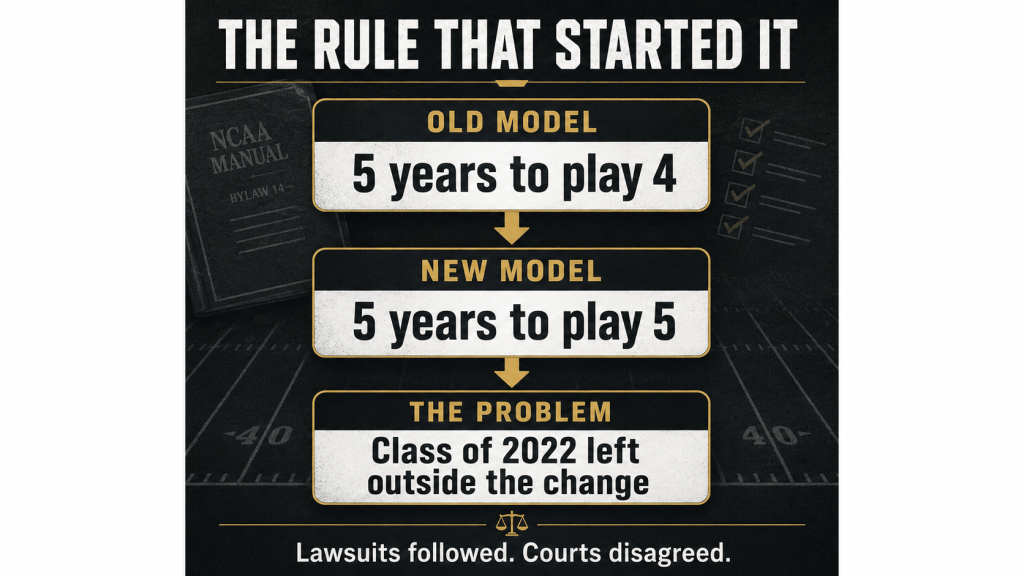
In June, the NCAA adopted a “five years to play five seasons” model, but it didn’t apply retroactively to the high school class of 2022, who’d already used up four seasons under the old system. That carve-out sparked a wave of lawsuits from athletes arguing they were unfairly excluded, with one lawsuit alone covering 16 football players among 33 athletes across multiple sports seeking a fifth year. Courts have ruled inconsistently — a federal judge in Colorado initially granted a blanket fifth year, then an appeals court stayed that ruling days later, throwing rosters back into limbo. Meanwhile, state courts have kept issuing their own, sometimes conflicting, injunctions.
RJ Luis Jr. and the pro-to-college pipeline.
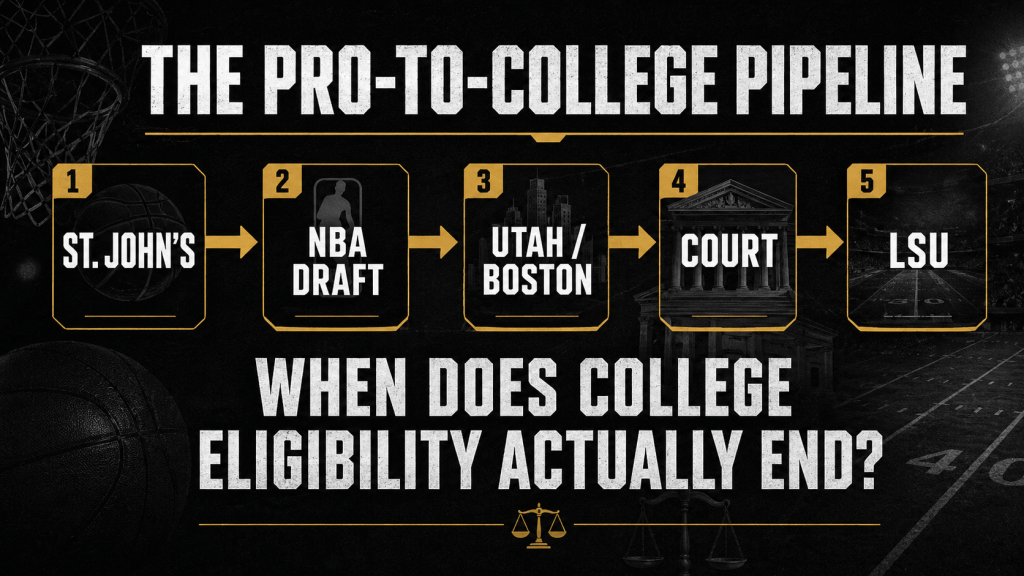
The most striking early case was St. John’s former All-American RJ Luis Jr. On August 24, a Louisiana judge granted him a preliminary injunction to play for LSU this season despite his professional basketball ties. Luis went undrafted in 2025, signed an NBA two-way contract with the Utah Jazz, was later traded to the Boston Celtics, and appeared in three Celtics preseason games — but never played in a regular-season NBA or G League game. His lawyers argued that made him different from international pros the NCAA already lets in — he simply never got meaningful game action. After a five-hour hearing, the judge sided with him over NCAA objections that he was unlikely to win reinstatement after choosing to turn pro.
Kiffin and the NFL pipeline.
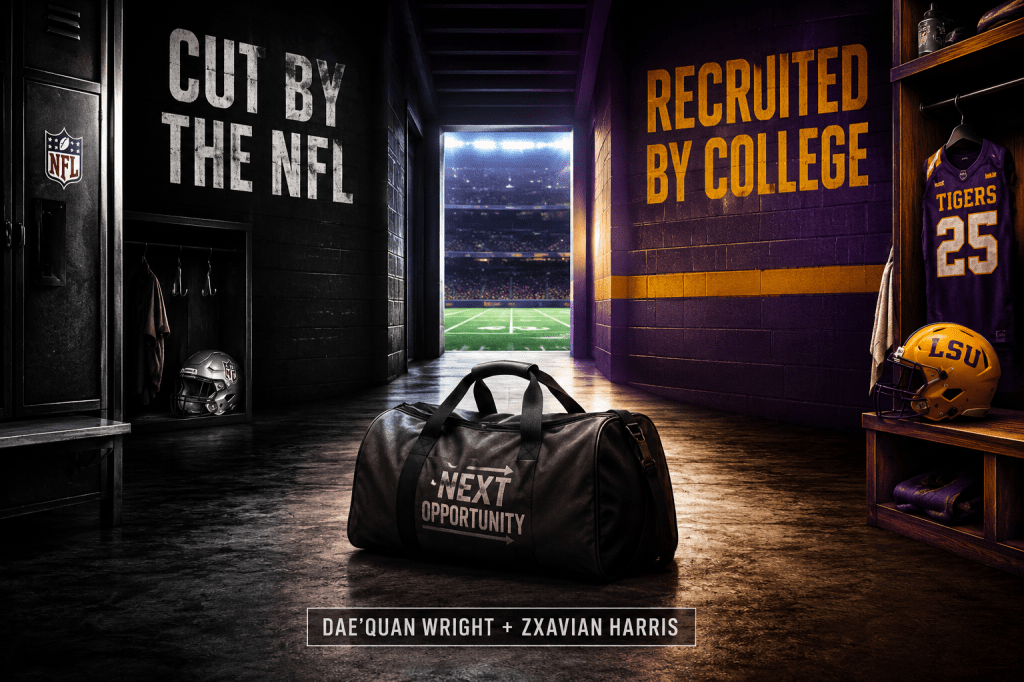
Football followed an even more direct route. LSU moved to add former Ole Miss players cut in NFL final roster cuts — tight end Dae’Quan Wright and defensive lineman Zxavian Harris among them — thanks to a Louisiana restraining order covering 16 players with only one year of NCAA eligibility left. Kiffin’s initial defense wasn’t philosophical; it was pragmatic: players “are either going to play for you or they’re going to play for someone else around the country,” so LSU decided to recruit them like most other programs would.
The institutions pushed back — and this time, with teeth.
The SEC was first to take a public stance, warning that letting pros return “will blur the line between college and professional sports, create significant competitive equity concerns, and reduce opportunities for high school and current college athletes.” The Big Ten turned that sentiment into enforceable policy first, passing a rule with real penalties attached: a coach suspension for half the remaining season plus an undisclosed fine for any violation.
Kiffin’s counterpunch.
Rather than back down, Kiffin escalated publicly, accusing the SEC and Big Ten of a moralistic double standard — willing to let some players benefit from court orders while trying to ban others. “We followed all court orders,” he said on The Pat McAfee Show. “I think you get into a really interesting situation as a conference if you’re now saying, ‘Well, we’re not going to follow this court order.’”
Then the SEC made it formal — and LSU didn’t fight it.
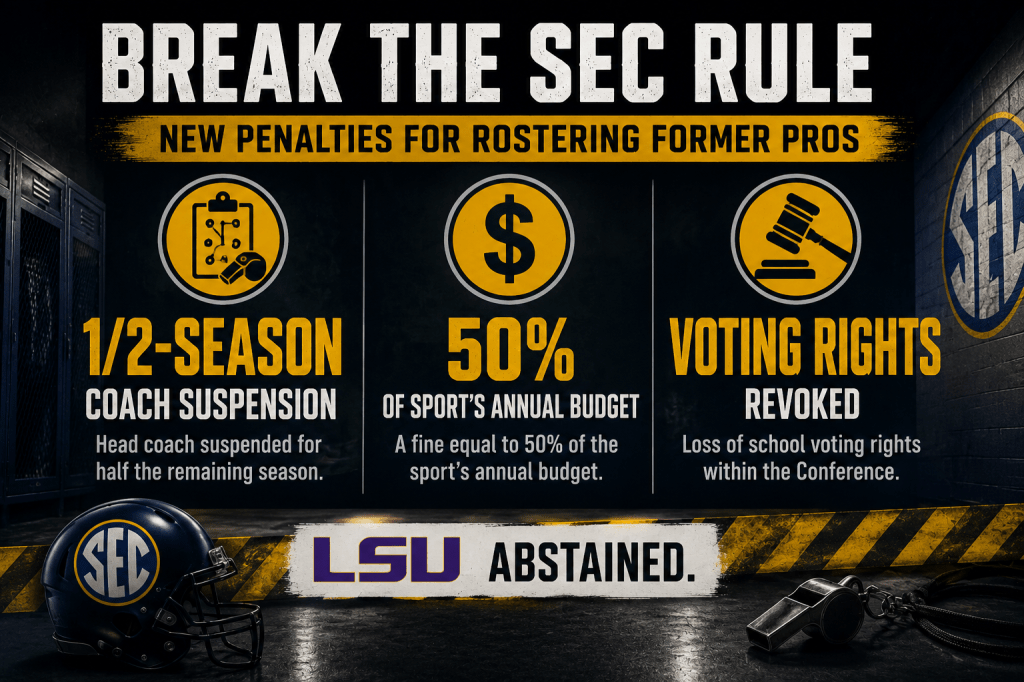
Days later, the SEC’s own membership voted to codify exactly the ban Kiffin had argued against, moving to sanction any member school that rosters a former professional football or basketball player. Athletic directors approved it 16-0, and chancellors and presidents confirmed steep penalties 15-0 — a half-season coach suspension, a fine equal to 50% of the sport’s annual budget, and revocation of the school’s conference voting rights — with LSU notably abstaining rather than voting no.
Then every other power conference fell in line.
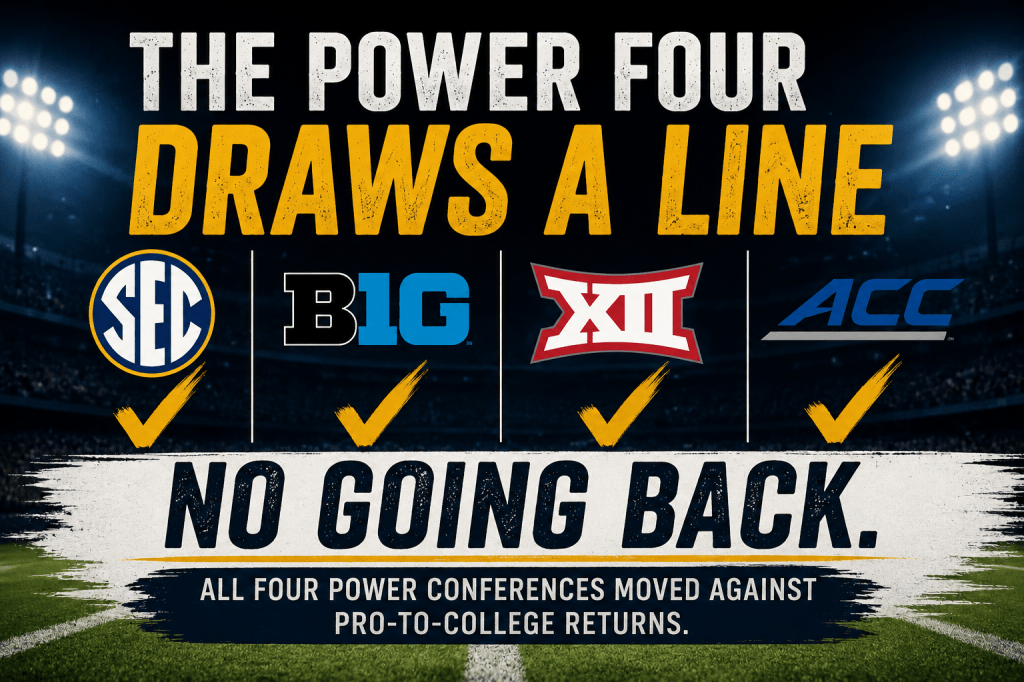
The Big 12 became the next to formalize a ban, going further than the others by covering all sports, not just football. Notre Dame separately made clear it is “totally opposed” to any pro-to-college transaction. The ACC then became the fourth and final Power Four conference to join, leaving college sports with a rare moment of unanimous institutional consensus — all four power conferences aligned against pro-to-college returns.
Then a Texas judge blew a hole in that consensus.
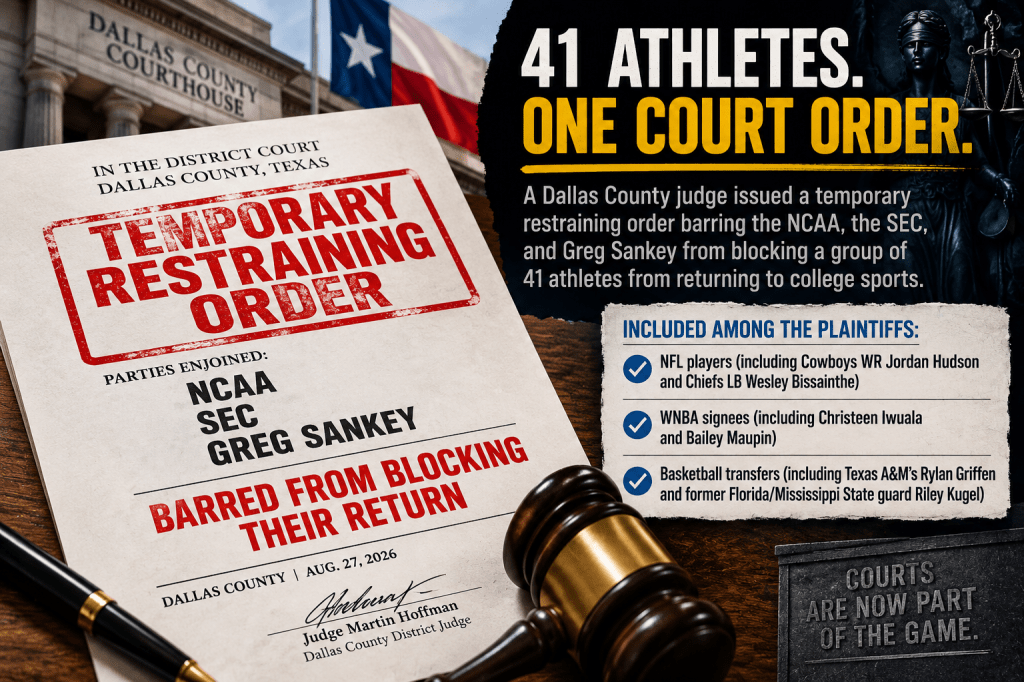
On August 27, Dallas County District Judge Martin Hoffman signed an order that hit differently than the ones before it: it expressly restrained the NCAA, the SEC, and Commissioner Greg Sankey with respect to 41 named plaintiffs seeking to return to college sports. It’s among the first rulings to specifically restrain a conference — not just the NCAA — from enforcing eligibility bans, and it flips the legal burden: if the NCAA or SEC wants to keep any of these 41 players out for some other reason, they now have to make that case in court rather than simply invoking their new rules. The group includes Dallas Cowboys receiver Jordan Hudson, Kansas City Chiefs players Wesley Bissainthe and Omari Evans, and WNBA signees Bailey Maupin and Christeen Iwuala, along with basketball transfers like Texas A&M’s Rylan Griffen and former Florida/Mississippi State guard Riley Kugel.
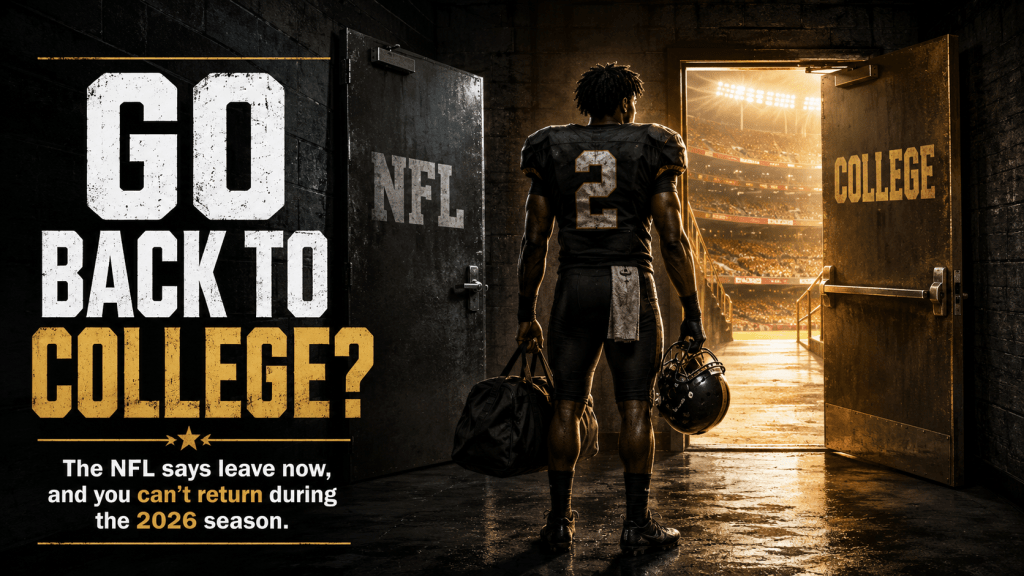
Attorney Ryan Downton, who represents plaintiffs across several of these state cases, was blunt about the conferences’ rules: “They can’t come out and create a rule with immediate effect that has such draconian effect punishment that no school will take any of these players.” Adding another wrinkle, the NFL has separately stated that any player who leaves an NFL roster to pursue this college eligibility path will be ineligible to return to the NFL for the rest of the 2026 season — meaning the athletes at the center of this fight are burning a real professional bridge to walk through a legally contested college one.
Why it matters.
This isn’t just a scheduling headache — it’s a structural question the NCAA never had to answer when amateurism was airtight. Every time the conferences have tried to close the door through policy, a state court has cracked it back open through a new filing, and neither side has landed a decisive, lasting win. The conferences now face a genuinely uncomfortable legal position: their own rules may be unenforceable against any plaintiff who successfully argues, as this Dallas case did, that the conference is acting in concert with an NCAA it’s already been enjoined from. With the SEC’s sanctions now on the books and the athletes’ attorneys actively preparing to challenge those very restrictions, a related hearing covering Wright, Harris, and 31 other class of 2022 athletes was set for the following Monday — a ruling there could determine whether the SEC’s brand-new penalty structure survives contact with the courts at all, or whether it becomes the next domino to fall.
Sources: This article draws on ESPN reporting covering the RJ Luis Jr. and Dae’Quan Wright rulings, the Big Ten, SEC, Big 12, and ACC conference bans, Kiffin’s on-air comments, and the Dallas County TRO naming the NCAA, SEC, and Greg Sankey as defendants. Additional reporting and corroboration came from On3, WRUF (ESPN affiliate), TigerRag, KBTX, Deseret News, ClutchPoints, and CBS Sports, which independently confirmed conference vote counts, penalty structures, the athletes named in the Dallas order, and the NFL’s stated policy on players who leave rosters to pursue college eligibility.


Leave a Reply