By Michael Phillips | Sports & Whatever | WNBA
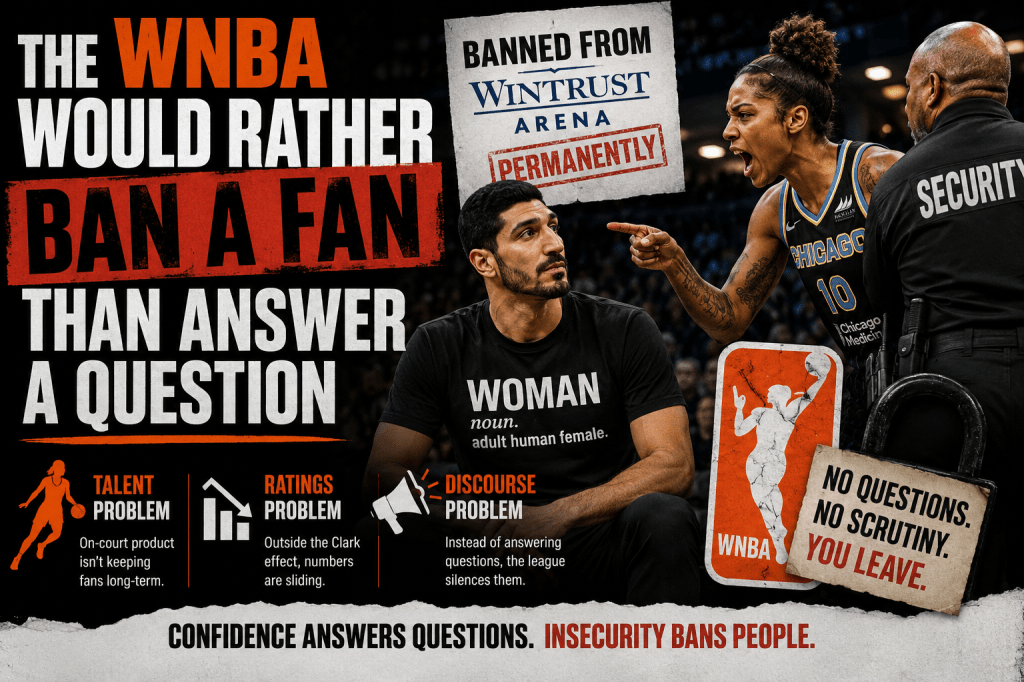
The WNBA has a talent problem, a ratings problem, and a discourse problem — and this week it showed exactly how it plans to handle all three: by kicking someone out of the building.
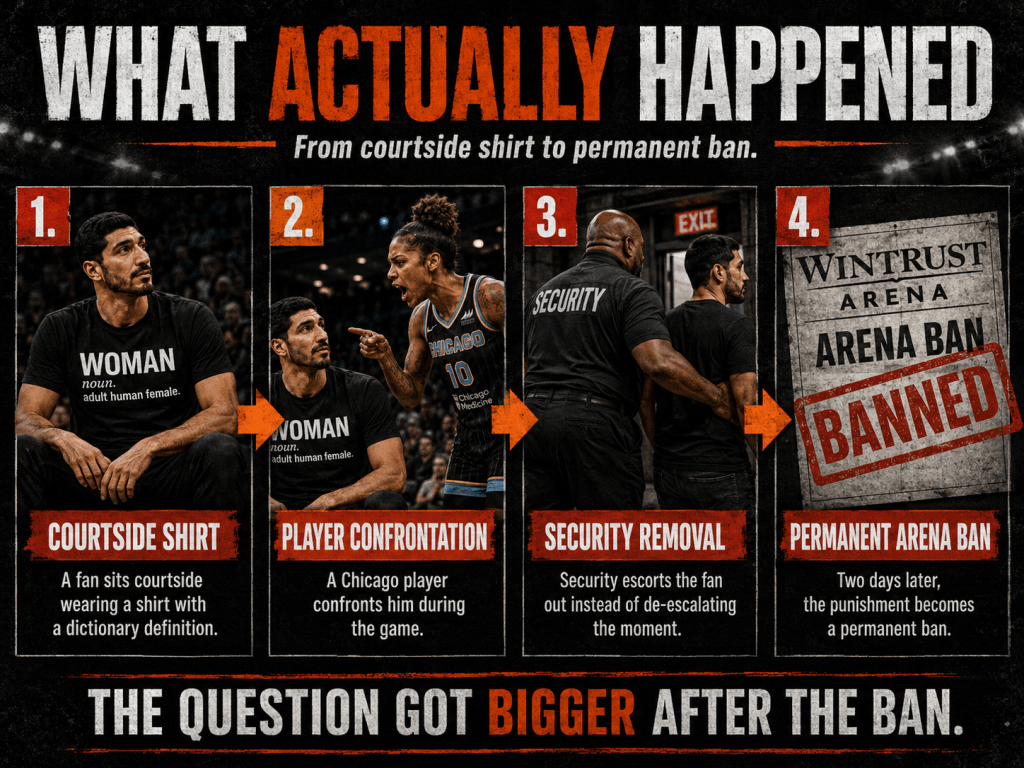
Enes Kanter Freedom sat courtside at a Sky-Fever game in a T-shirt that said “WOMAN noun. adult human female.” That’s it. That’s the offense. Late in the third quarter, Sky guard Natasha Cloud walked over and started yelling at him. Security didn’t remove her. They removed him. Two days later, Sky owner Michael Alter made it permanent: Kanter Freedom is banned from Wintrust Arena.
Ask yourself what actually happened here. A fan, sitting in his seat, wearing a shirt with a dictionary definition on it, got confronted by a player during a live game. And the league’s answer wasn’t to tell its players to play basketball. It was to ban the fan.
“A fan, sitting in his seat, wearing a shirt with a dictionary definition on it, got confronted by a player during a live game.”
This didn’t come out of nowhere. Kanter Freedom and Royce White declared themselves for the 2027 WNBA Draft, saying they identify as women — a stunt, sure, but a pointed one, aimed squarely at a league that still won’t say what “woman” means in its own rulebook. The WNBA’s collective bargaining agreement says only women are eligible to play. It does not define the term.
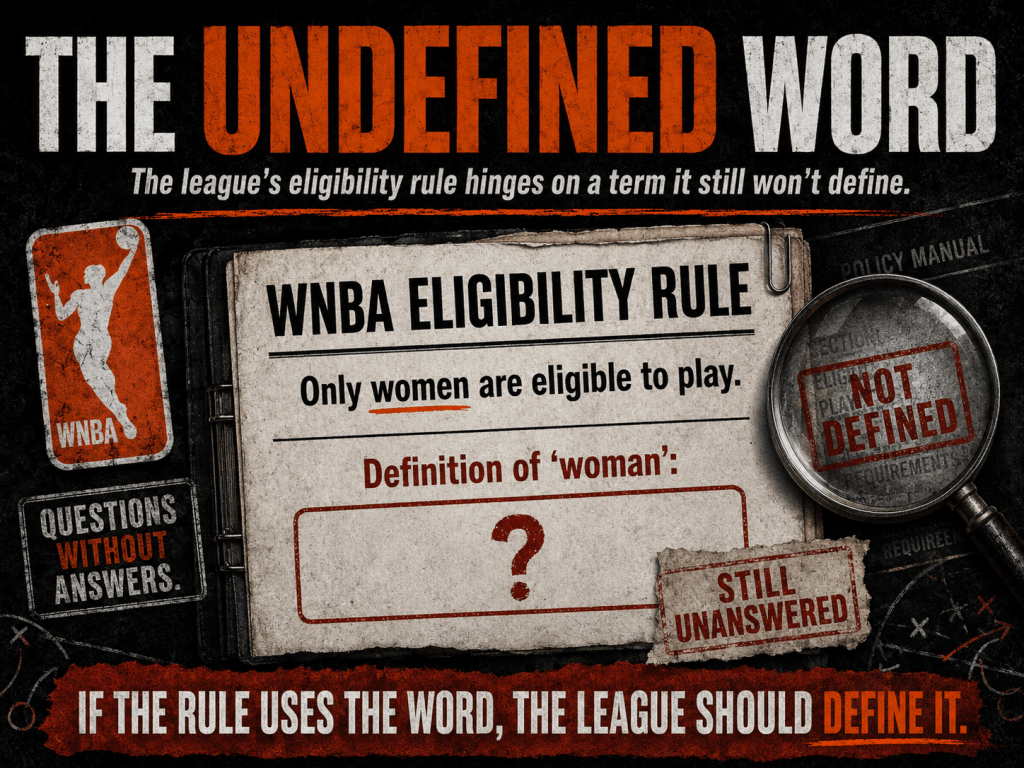
League sources call the whole thing a “publicity stunt” and insist there’s no real eligibility question to answer. Fine — then answer it. Say what the policy is. Instead, the league has spent weeks in a defensive crouch, refusing to define the one word its entire eligibility rule hinges on, while the conversation gets louder anyway because nobody in charge will just say the sentence.
“The story is a league that, when confronted with a question it doesn’t want to answer, chose to eject the person asking it rather than answer it.”
And that’s the actual story. Not Kanter Freedom’s shirt. Not his wingspan or his media savvy or whatever motive you want to assign him. The story is a league that, when confronted with a question it doesn’t want to answer, chose to eject the person asking it rather than answer it.
Think about who’s watching.
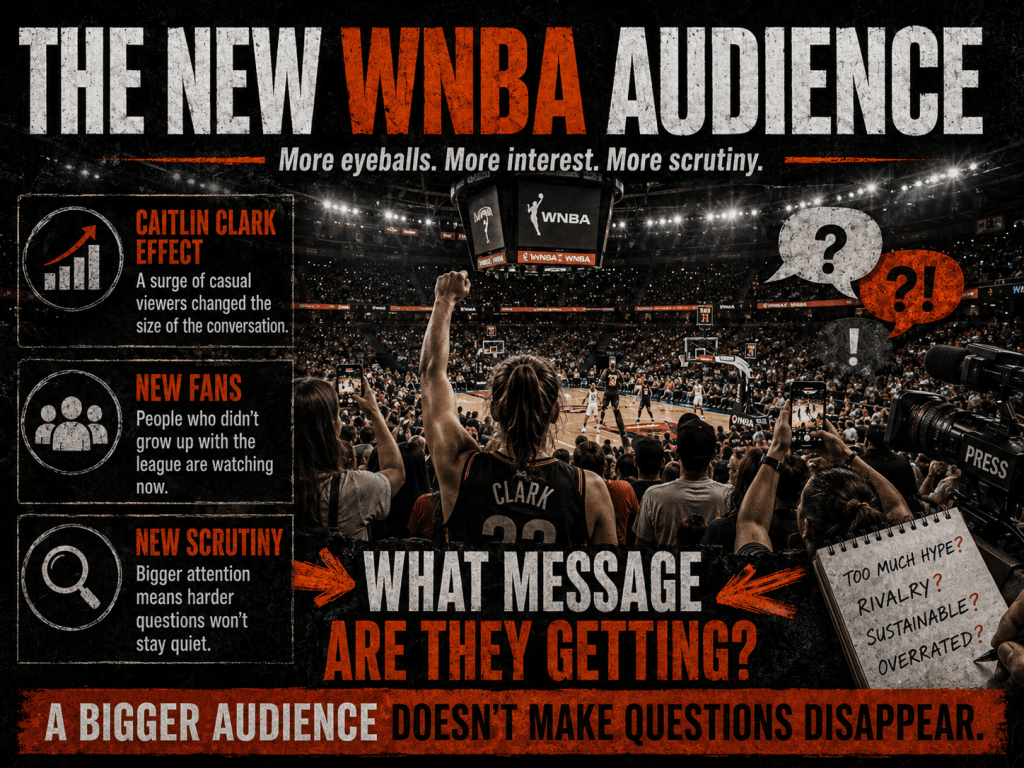
The WNBA has never had more casual eyeballs on it than it does right now, riding the Caitlin Clark wave, with Sophie Cunningham pulling in a whole different audience with her willingness to actually say what she thinks. Those are the fans who just discovered this league. And the message they’re getting is: don’t poke at anything, don’t ask uncomfortable questions, and if a player decides she doesn’t like your shirt, you’re the one who leaves.
“You don’t grow a fan base by making it clear that scrutiny gets you banned.”
You don’t grow a fan base by making it clear that scrutiny gets you banned. You grow it by being confident enough in your product and your rules to let people ask hard questions without treating the question itself as the threat. The WNBA had a chance to just state its policy plainly and let the “publicity stunt” die on its own. Instead, it banned a fan and let the story get bigger. That’s not strength. That’s a league that would rather clear the room than clear its throat.
“That’s not strength. That’s a league that would rather clear the room than clear its throat.”


Leave a Reply