By Michael Phillips | Sports & Whatever | Business
Remember when streaming was supposed to kill the cable bill?
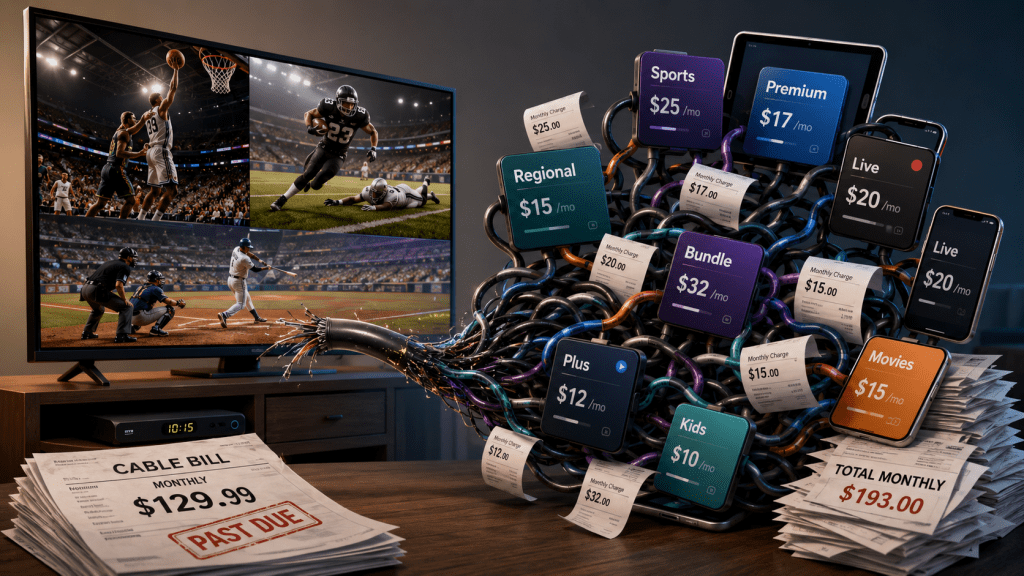
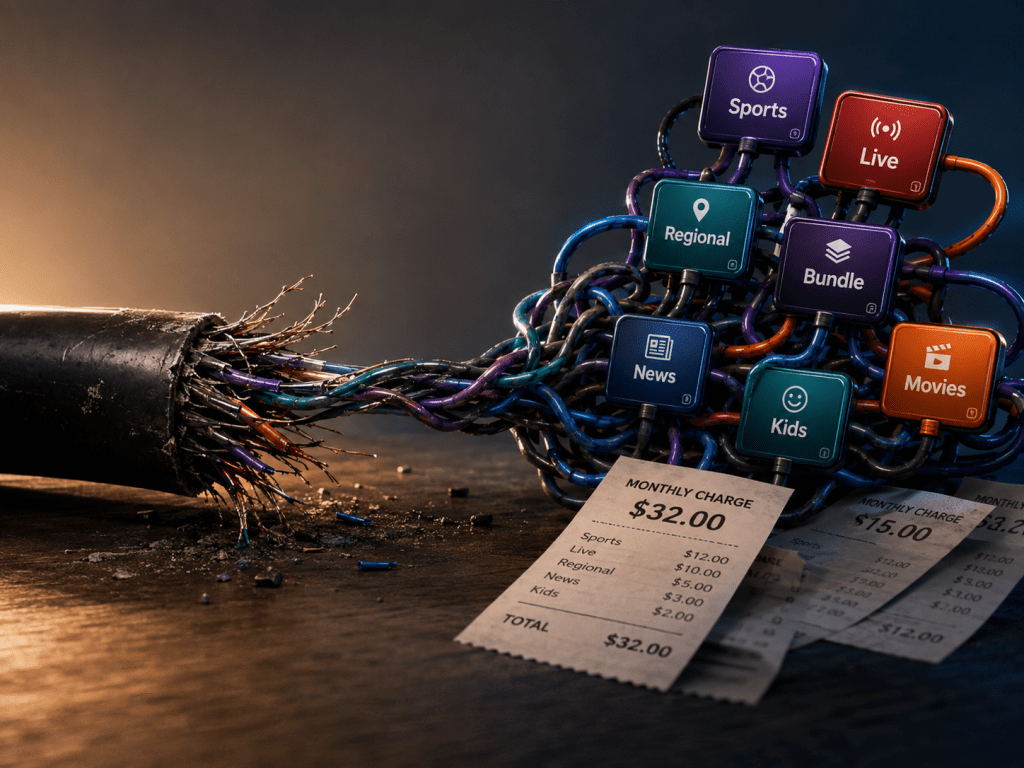
That was the pitch, anyway. Ditch the 200-channel bundle nobody watched in full, pay only for what you actually want, and pocket the difference. A decade later, sports fans are learning the punchline: the bundle didn’t disappear. It just got rebuilt, one app at a time, and it’s costing more than the thing it replaced.
“The bundle didn’t disappear. It just got rebuilt, one app at a time, and it’s costing more than the thing it replaced.”
The math doesn’t work anymore
ESPN’s standalone streaming service launched at $299.99 a year. As of September 2026, that’s climbing to $319.99 — $31.99 a month if you’d rather pay that way. That’s ESPN alone, and it doesn’t include ESPN+ extras, blackout-prone regional games, or anything outside the Disney umbrella.
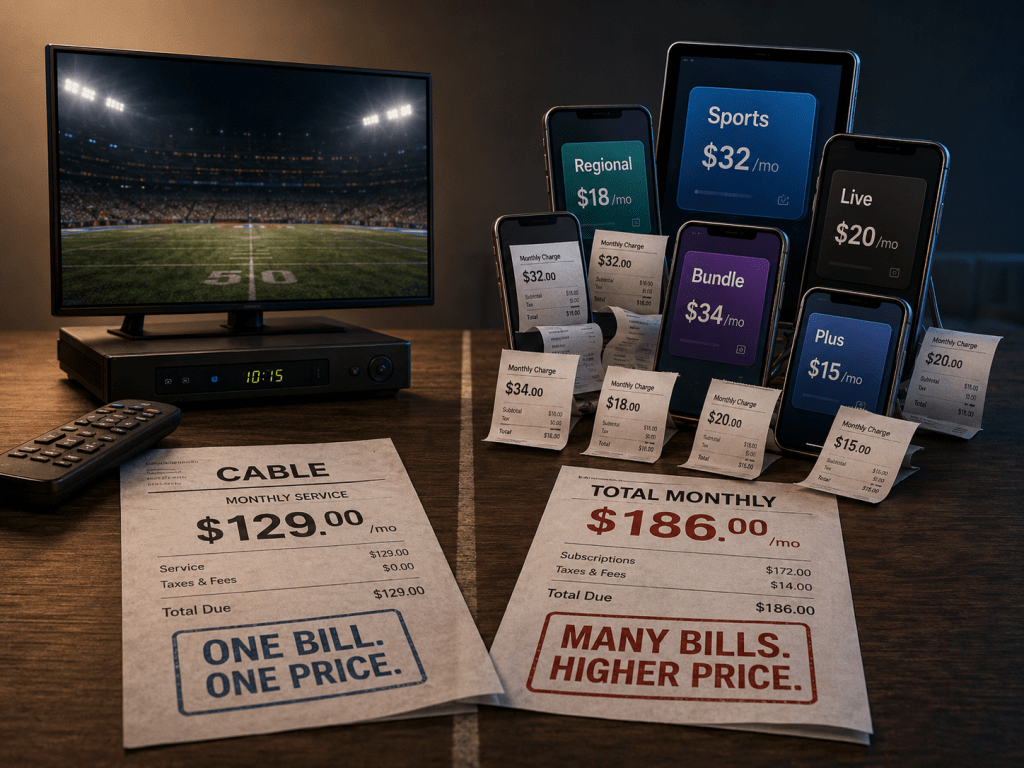
Peacock has raised its prices repeatedly in the last two years — first ahead of the Olympics, then again as it added NBA rights, most recently pushing its premium ad-free tier north of $17 a month. Fox and ESPN are rolling out a joint sports bundle priced around $34 a month. Add Paramount+ for UFC, Apple TV for MLS, and a regional sports app for the local baseball team, and a fan trying to watch all their sports is easily clearing $150–200 a month — before Netflix, Hulu, or anything with no sports content at all.
“Individually, the increases are forgettable. Added up over five years, it’s a second rent payment.”
None of this is hidden. It’s happening in public, one press release at a time, each framed as a modest adjustment: two dollars here, three dollars there. Individually, forgettable. Added up over five years, it’s a second rent payment.
Why this keeps happening
The honest answer is that live sports rights are the last thing people won’t pirate or wait out. A prestige drama can wait for the reviews. A playoff game can’t — you watch it live, or you don’t watch it at all. That scarcity is exactly why leagues can auction their rights to the highest bidder, and why media companies keep paying more for them: the NBA’s rights deal alone runs in the billions per year, and that cost doesn’t stay with the network. It gets passed straight to the subscriber.
“Streaming unbundled everything into a dozen separate bills, each creeping upward independently.”
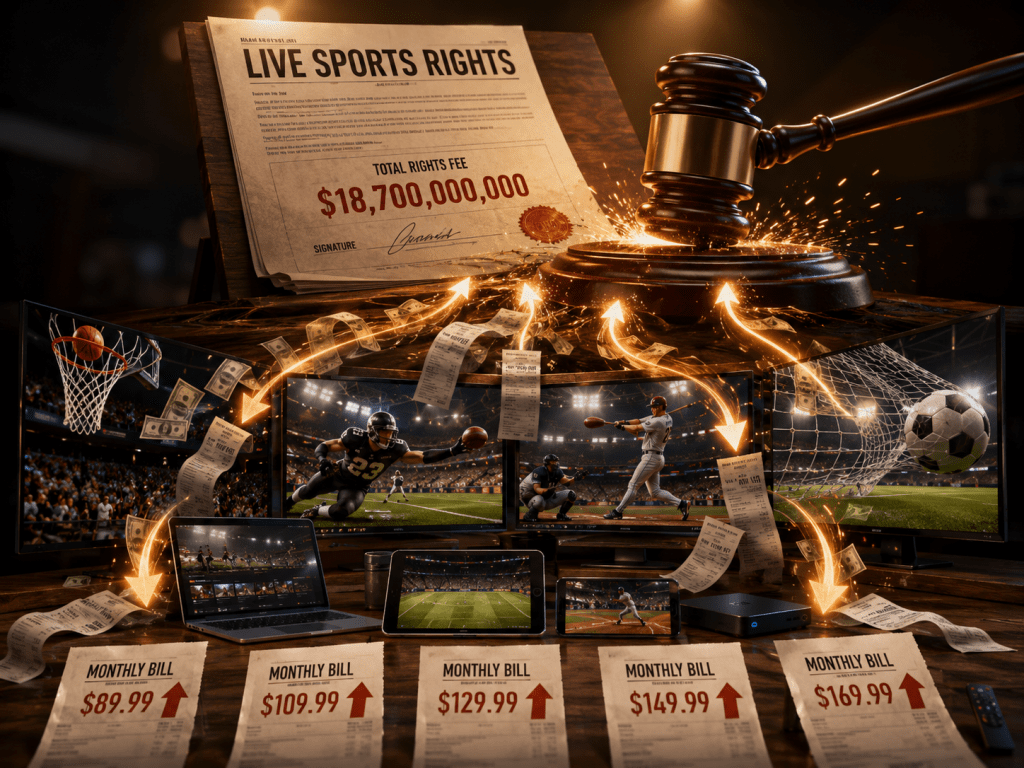
Streaming was supposed to break that cycle by cutting out the cable middleman. Instead, it multiplied it. Cable bundled everything into one bill, which was annoying but at least contained. Streaming unbundled everything into a dozen separate bills, each creeping upward independently, each easy to underestimate until you add them side by side.
The timing makes it worse
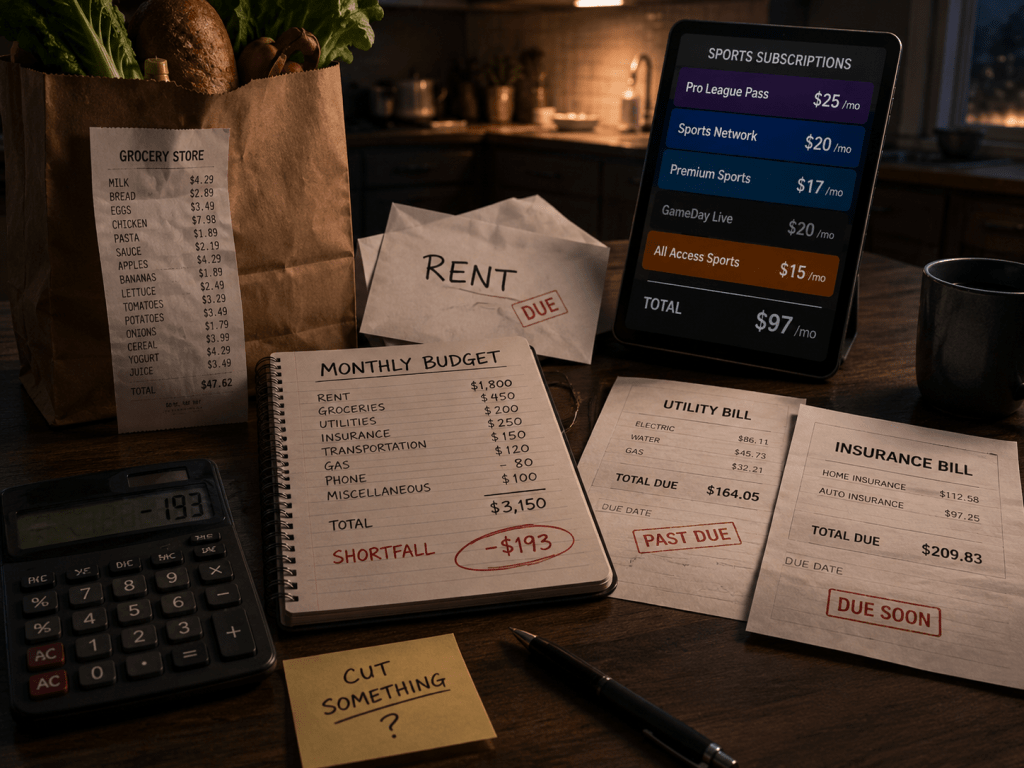
This isn’t happening in a vacuum. Grocery prices, rent, insurance, and utilities have all outpaced wage growth for years. Asking a household already stretched thin to also carry $150 a month in overlapping sports subscriptions isn’t a rounding error — it’s a real trade-off against other spending. “Sports fans keep paying more and getting less” isn’t just a complaint about value; it’s a complaint about a bill that keeps growing while the rest of the budget doesn’t.
“Sports fans keep paying more and getting less isn’t just a complaint about value — it’s a complaint about a bill that keeps growing while the rest of the budget doesn’t.”
Is there a breaking point?
Probably — but it’s likely to show up as a slow bleed rather than a single dramatic moment. A few signs to watch:
- Subscriber churn during the off-season. If people start canceling ESPN in the spring and resubscribing every August, that’s the market quietly rationing itself.
- Piracy creeping back up. Every time legal access gets harder to justify, illegal streams get a little more mainstream.
- Consolidation pressure. The ESPN–Fox bundle is one early sign that even the media companies know fragmentation is unsustainable — bundling is coming back, just under new ownership.
- A generational shift in what “watching sports” even means. Younger fans increasingly follow highlights, clips, and creator commentary instead of full broadcasts, which quietly erodes demand for a $30-plus-a-month all-access pass.
“The cord got cut. The bundle came back. Only now, every piece has its own login and its own monthly charge.”
None of that adds up to sports fans walking away entirely — the appetite for live games is too durable for that. But “cutting the cord” as a money-saving move has quietly stopped being true. What’s left is a slower, more honest question: how many $15-and-up subscriptions can one household justify before it just gives up and picks two or three to keep?
That’s not a hypothetical for later. For a lot of fans, it’s already this fall’s budgeting decision.


Leave a Reply