By Michael Phillips | MDBayNews
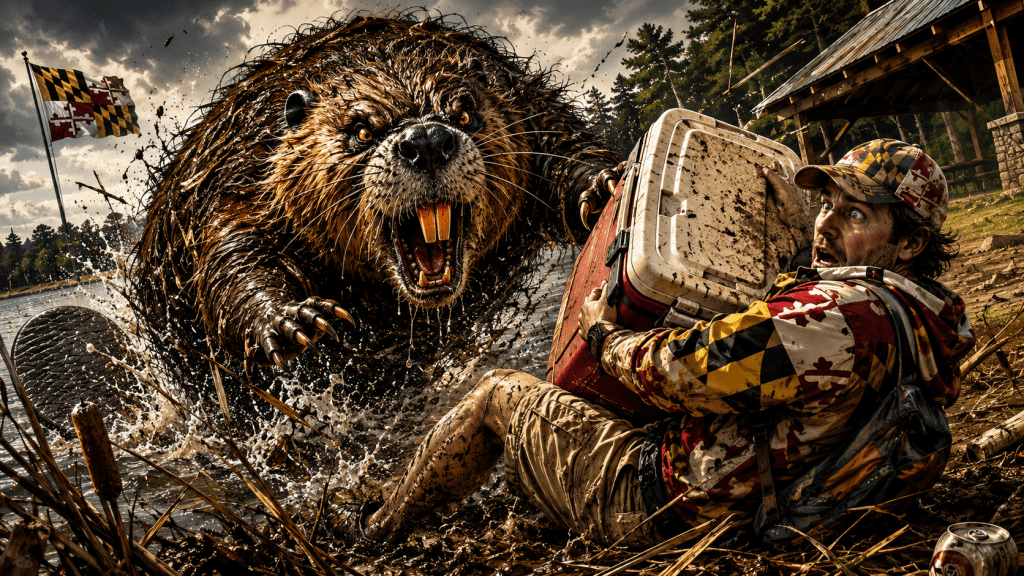
Maryland has had several recent beaver attacks, including rabies-positive animals. Here’s how to avoid becoming part of the next wildlife press release.
This is apparently a sentence Marylanders need in 2026:
Here is how to defend yourself from an attacking beaver.
Normally, beavers want absolutely nothing to do with you. They have dams to build, trees to destroy, and waterfront property to engineer without permits. But after several recent attacks in Maryland — including beavers that tested positive for rabies — it is probably worth knowing what to do if one of North America’s largest rodents suddenly decides you are the problem.
The good news: beaver attacks are rare.
The less-good news: “rare” becomes substantially less comforting when one is swimming directly at you.
First: Do Not Pick a Fight With the Beaver
If you see a normal beaver minding its own business, return the favor. Maryland wildlife officials recommend keeping at least 25 yards away.
Do not approach it for a picture.
Do not feed it.
Do not pet it.
Do not corner it.
And please do not attempt to determine whether it is rabid by getting closer and examining its facial expression.
Rabid animals can show aggression, unusual friendliness, confusion, poor coordination, or excessive salivation, but you cannot reliably diagnose rabies just by looking at one. If a beaver is acting strangely, your job is not to become Maryland’s newest volunteer wildlife veterinarian.
Back away.
If You’re in the Water, Get Out
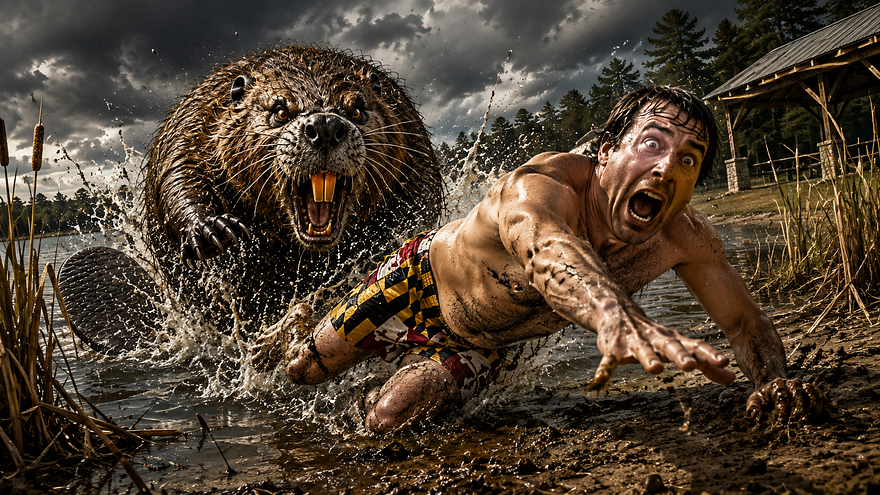
This is especially important because several of Maryland’s recent incidents happened around people swimming or wading.
A beaver is exceptionally good at swimming. You probably are not exceptionally good at out-swimming an angry beaver. If one begins deliberately approaching you, move toward shore, a dock, or a boat as quickly and safely as possible. The goal isn’t to win a swimming race against a beaver. It’s to stop participating in one.
Once you reach land, continue putting distance between yourself and the animal. Do not stand at the shoreline afterward to see what it does next.
Spoiler: whatever happens next is more interesting when viewed from farther away.
Put Something Between You and Its Teeth
If the animal keeps coming, grab something you can use as a barrier.
A backpack.
Cooler.
Paddle.
Fishing gear.
Chair.
Bicycle.
Trash can.
Thick jacket.
Anything sturdy enough to keep its mouth away from your body.
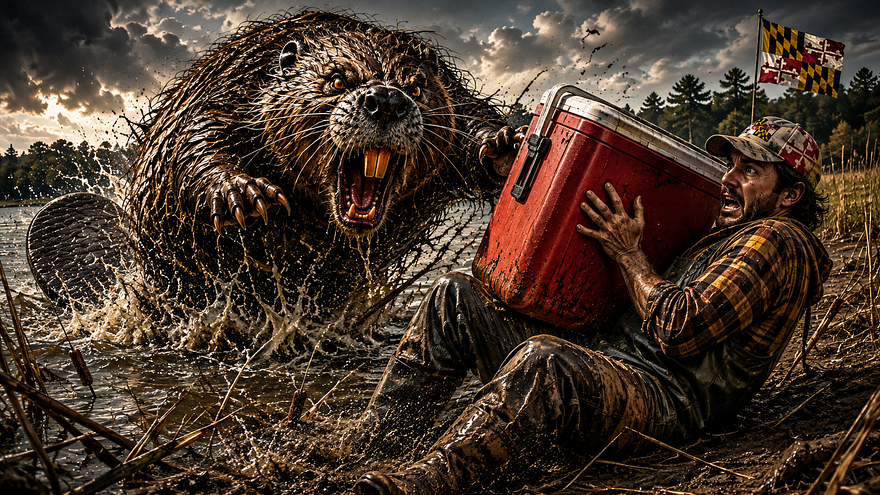
Adult beavers commonly weigh around 30 to 60 pounds, and their front teeth are specifically designed to chew through wood.
Think about that for a moment. Then stop thinking about it.
Keep your hands away from its mouth and protect your legs while backing toward safety.
Do Not Corner It
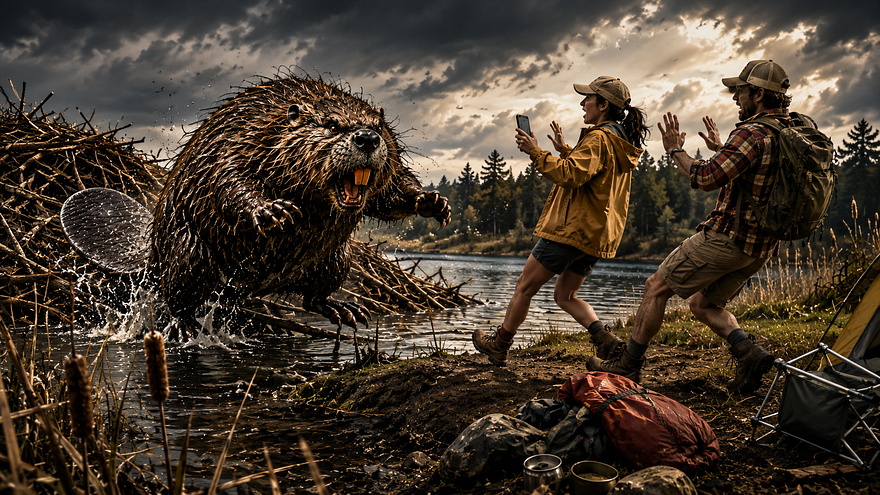
Even a healthy wild animal may become defensive when trapped. Give the beaver an escape route. If it runs away, congratulations.
You won.
There is no bonus round.
Do not chase it. Do not follow it into the woods. Do not decide the beaver has insulted your honor and demand satisfaction.
Call park staff, animal control, or Maryland Natural Resources Police and let people with equipment handle it.
What If It Actually Attacks?
At this point, diplomacy has failed. Protect yourself.
Keep an object between yourself and the animal whenever possible. Protect your face, neck, hands, and legs. Use whatever reasonable force is necessary to break contact and escape.
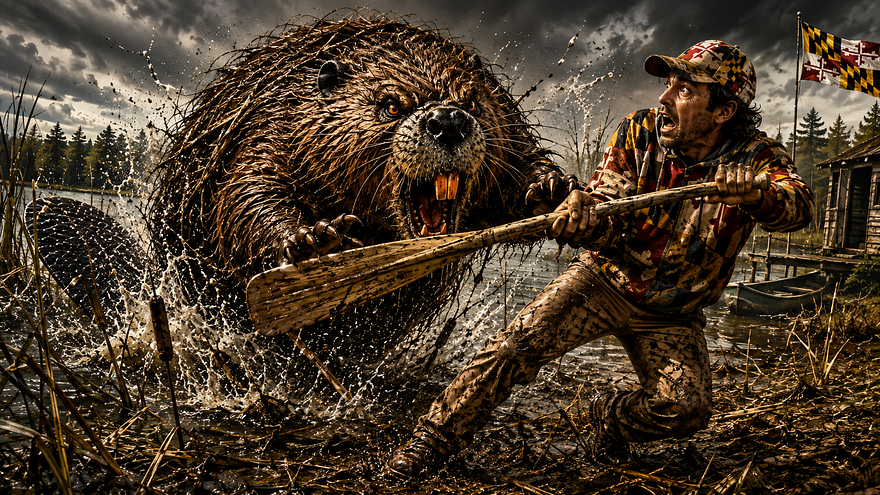
The goal is not to kill the beaver. The goal is not to capture the beaver. The goal is definitely not to establish dominance over the beaver. The goal is:
STOP GETTING BITTEN BY THE BEAVER.
If it grabs your clothing, do not reach down and start putting your fingers near its mouth, trying to pry it loose. Use barriers, distance, and available objects to separate yourself.
Then leave.
If You Get Bitten, Wash the Wound Immediately
Now the situation becomes considerably less funny.
Rabies is preventable when treated appropriately before symptoms begin. Once clinical rabies develops, it is almost always fatal.
So do not go home, post the video, answer 47 Facebook comments, and then remember six hours later that perhaps the bite deserves medical attention. Wash the wound immediately.
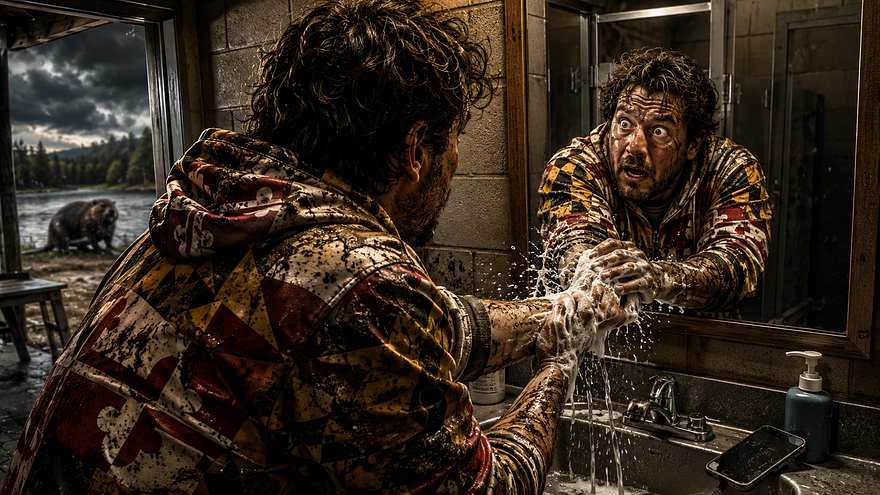
The CDC recommends thoroughly washing a possible rabies exposure with soap and water for 15 minutes.
Yes.
Fifteen minutes.
Not 30 seconds.
Not “I splashed some bottled water on it.”
Wash it thoroughly.
If there is serious bleeding, apply firm pressure with clean cloth or gauze and seek emergency medical attention.
Then Get Medical Care
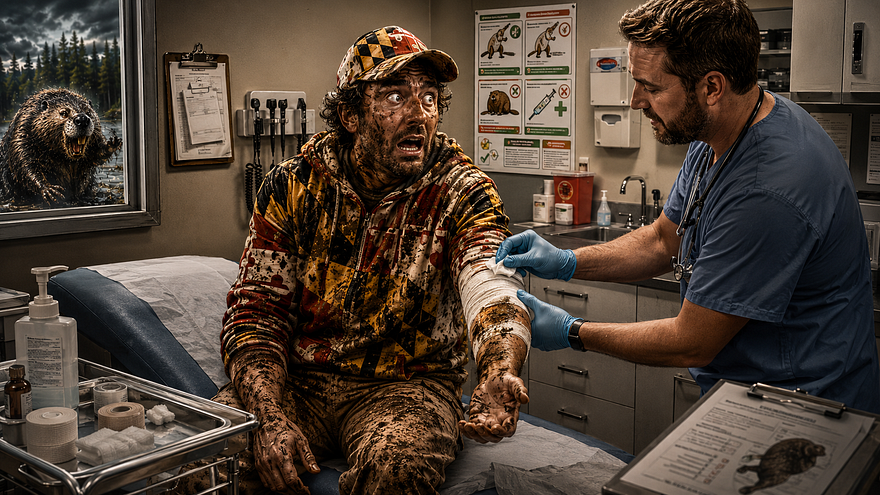
Do not wait to see whether you “feel fine.” You will probably feel fine immediately after a rabies exposure. That is exactly why waiting for symptoms is a terrible strategy.
A healthcare provider and public-health officials can determine whether you need rabies post-exposure prophylaxis, commonly called PEP.
For someone who has never previously received rabies vaccination, CDC guidance generally involves:
- Thorough wound cleaning
- Human rabies immune globulin
- A rabies vaccine on Day 0
- Additional vaccine doses on Days 3, 7, and 14
There are different recommendations for people who were previously vaccinated and for some people with weakened immune systems.
In other words:
This is not the moment to crowdsource medical treatment from somebody named “FishingDad1974” in a Facebook group.
Talk to a doctor.
Report the Attack
Contact local animal control, your county health department or park officials. Authorities may need to locate and test the animal and determine whether other people or pets were exposed.
If the animal can be safely captured by professionals, testing can help determine whether rabies treatment is necessary.
Notice the important word there:
Professionals.
Do not chase down a possibly rabid beaver yourself because you would like to assist with laboratory specimen collection.
One bite is sufficient.
Keep Your Dog Away Too
Dogs should be leashed around areas with wildlife, particularly near streams, lakes, and ponds. Keep their rabies vaccinations current.
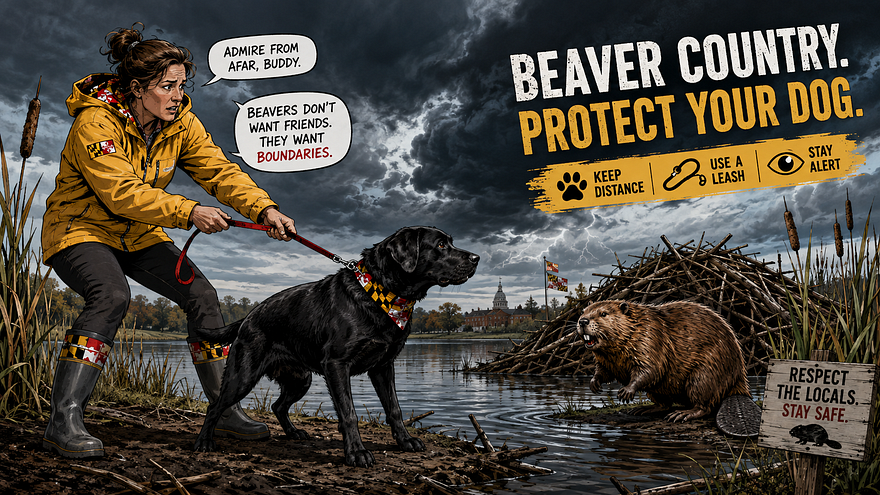
If your pet tangles with a beaver, raccoon, fox, bat, or other animal that could carry rabies, contact your veterinarian and animal control. And be cautious handling the pet afterward because saliva from the wild animal could potentially remain on its fur.
Your dog’s instinct may be:
GIANT WATER SQUIRREL. MUST INVESTIGATE.
Your instinct should be:
Absolutely not.
Maryland Is Not Experiencing a Beaver Uprising
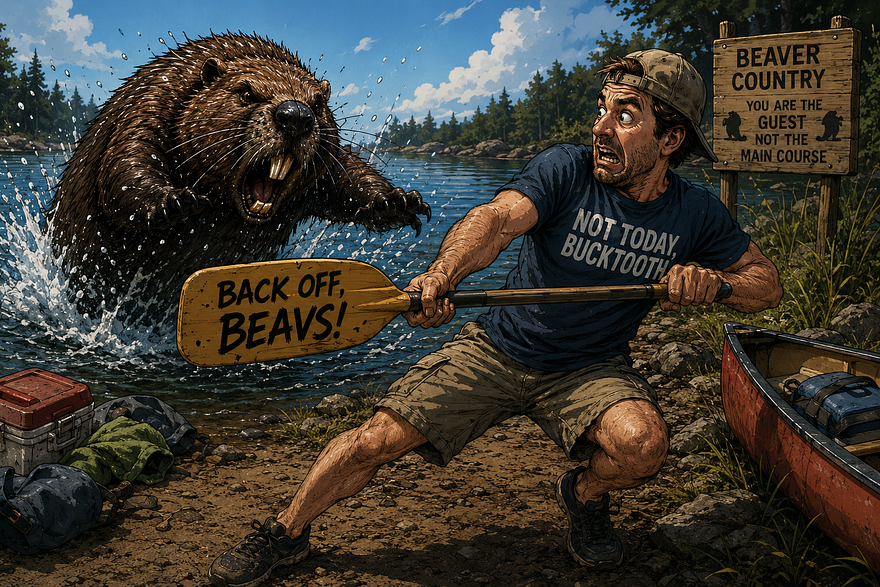
The recent attacks are unusual. Beavers normally avoid people, and Maryland wildlife officials have emphasized that attacks are rare. So there is no reason to panic every time you see a beaver swimming across a pond.
Watch it from a distance.
Enjoy nature.
Take a picture.
Just maybe don’t walk into the water and ask whether it wants to be friends.
The Maryland Rabid Beaver Survival Guide
See a beaver? Stay at least 25 yards away.
It approaches you? Back away.
It follows you in the water? Get out.
It charges? Put something solid between you and its teeth.
It attacks? Protect yourself, break contact, and escape.
It bites or scratches you? Wash the wound with soap and water for 15 minutes and seek prompt medical care.
Possible rabies exposure? Contact your local health department and let medical professionals determine whether you need rabies treatment.
And finally:
If a wild beaver suddenly starts aggressively swimming straight toward you, this is not the time to unlock your phone and switch from photo mode to video.
You already have enough content.


Leave a Reply