Tag: Maryland politics
-
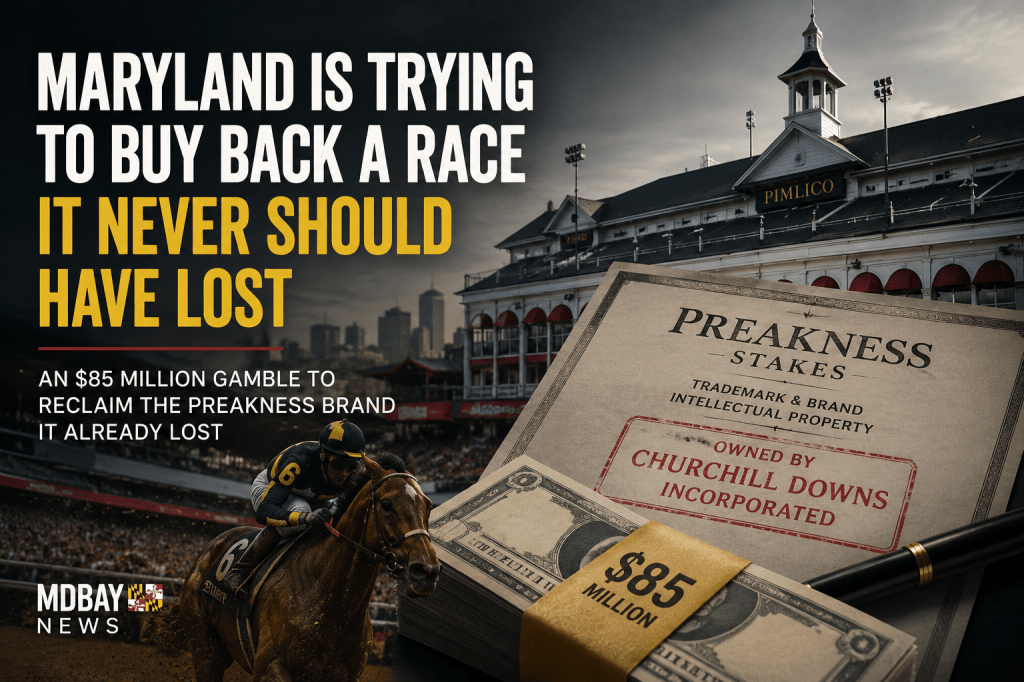
Maryland Is Trying to Buy Back a Race It Never Should Have Lost
Maryland plans to spend $85 million to reacquire the Preakness Stakes brand, previously owned by Churchill Downs Incorporated (CDI). The state’s history of mismanagement raises concerns about its ability to effectively steward racing assets. CDI, with its successful track record, holds significant leverage in the negotiations.
-
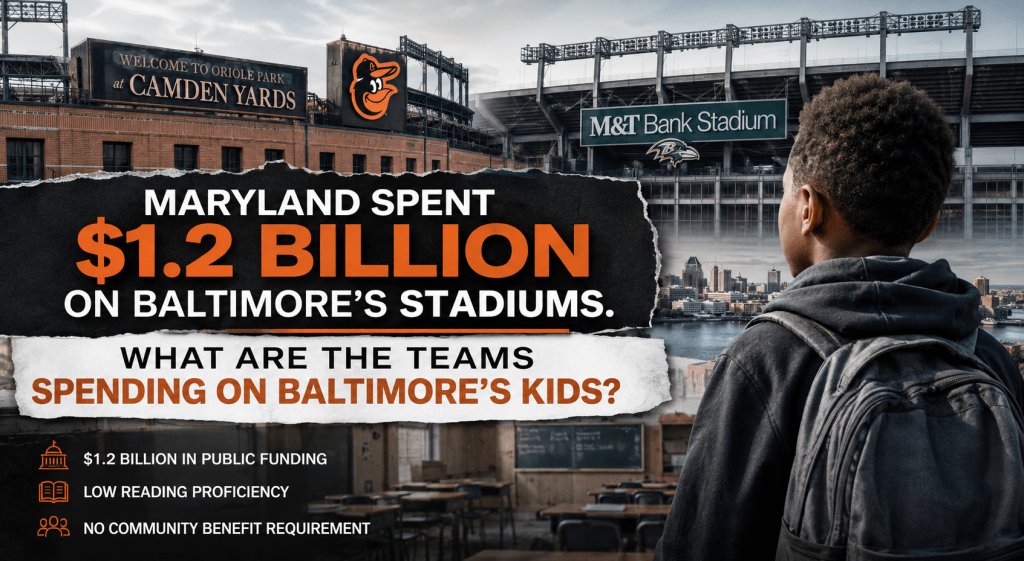
Maryland Spent $1.2 Billion on Baltimore’s Stadiums. What Are the Teams Spending on Baltimore’s Kids?
The New York Yankees recently honored 11,500 Bronx students for achievements in academics and community service, raising questions about Baltimore’s teams’ community contributions. Despite Maryland’s substantial financial support for stadiums, the Orioles’ outreach has diminished, lacking formal programs for local schools. There’s a growing demand for accountability regarding public investments in private franchises.
-
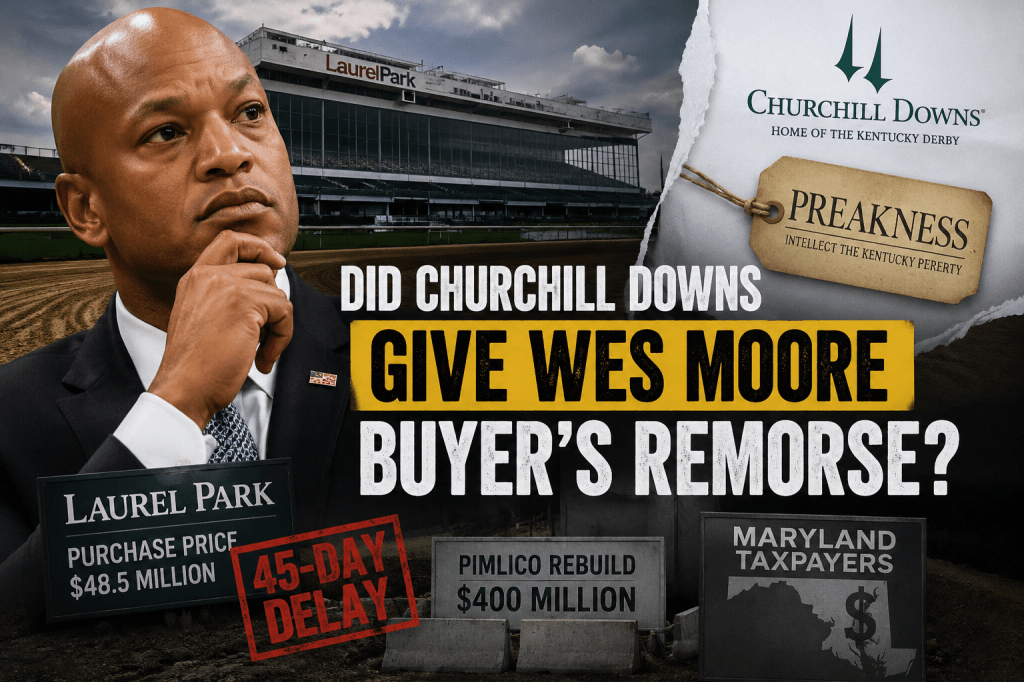
Did Churchill Downs Give Wes Moore Buyer’s Remorse?
Governor Wes Moore’s $48.5 million purchase of Laurel Park, aimed at strengthening Maryland’s thoroughbred racing industry, faces a 45-day financial review that raises concerns. Past mismanagement and Churchill Downs’ acquisition of the Preakness name limit the state’s leverage. Moore must clarify if the investment strategy remains solid amid these challenges.
-
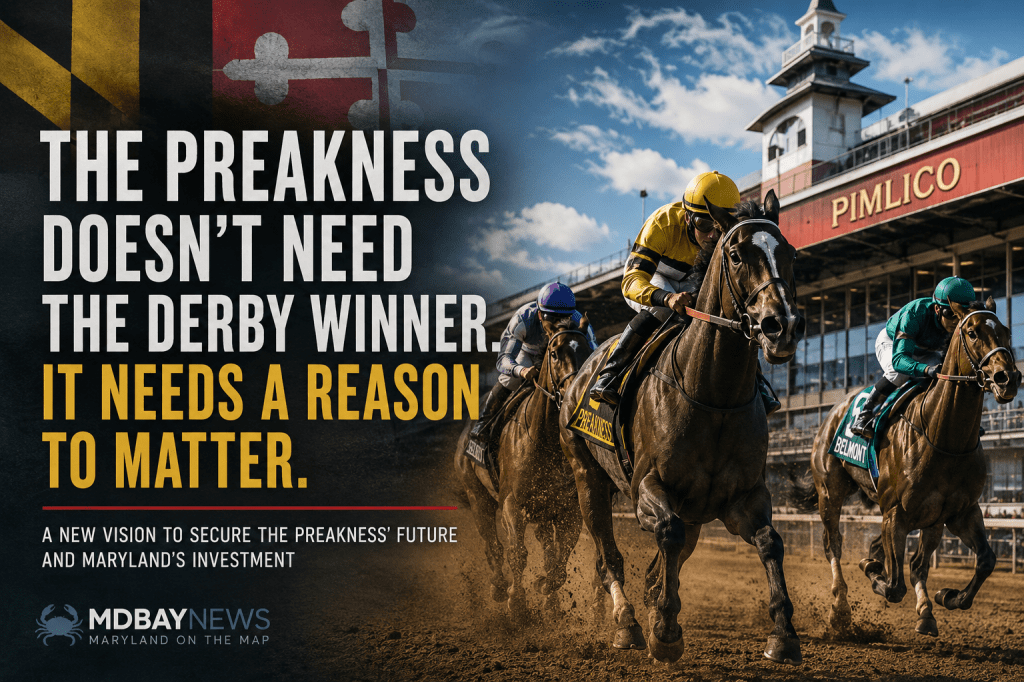
The Preakness Doesn’t Need the Derby Winner. It Needs a Reason to Matter.
Golden Tempo will skip the Preakness Stakes for health reasons, highlighting a broader issue in Maryland’s horse racing industry. The current Triple Crown format relies too heavily on Derby winners, diminishing the Preakness’s significance. A proposed championship structure could enhance its value and attract competitors, ensuring it remains relevant regardless of Derby participation.
-
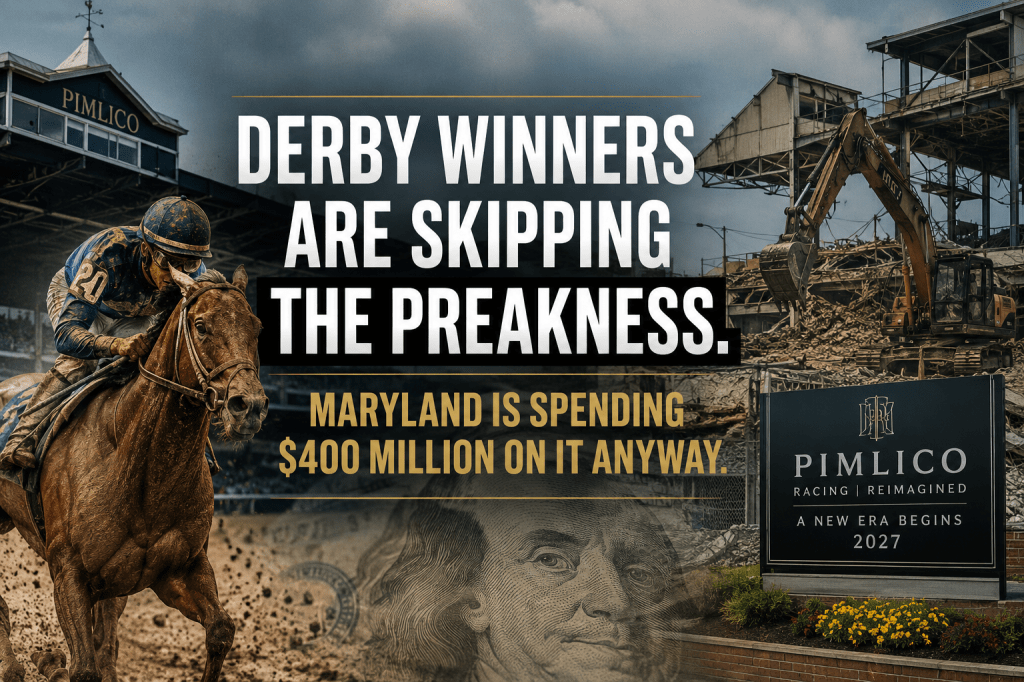
Derby Winners Are Skipping the Preakness. Maryland Is Spending $400 Million on It Anyway.
Cherie DeVaux Racing announced that Golden Tempo will not compete in the Preakness Stakes, continuing a trend of Derby winners opting out due to modern training practices and financial considerations. Maryland’s $400 million investment in Pimlico faces challenges, as the state lacks control over scheduling and racing decisions, with no Triple Crown winners since 2018.
-
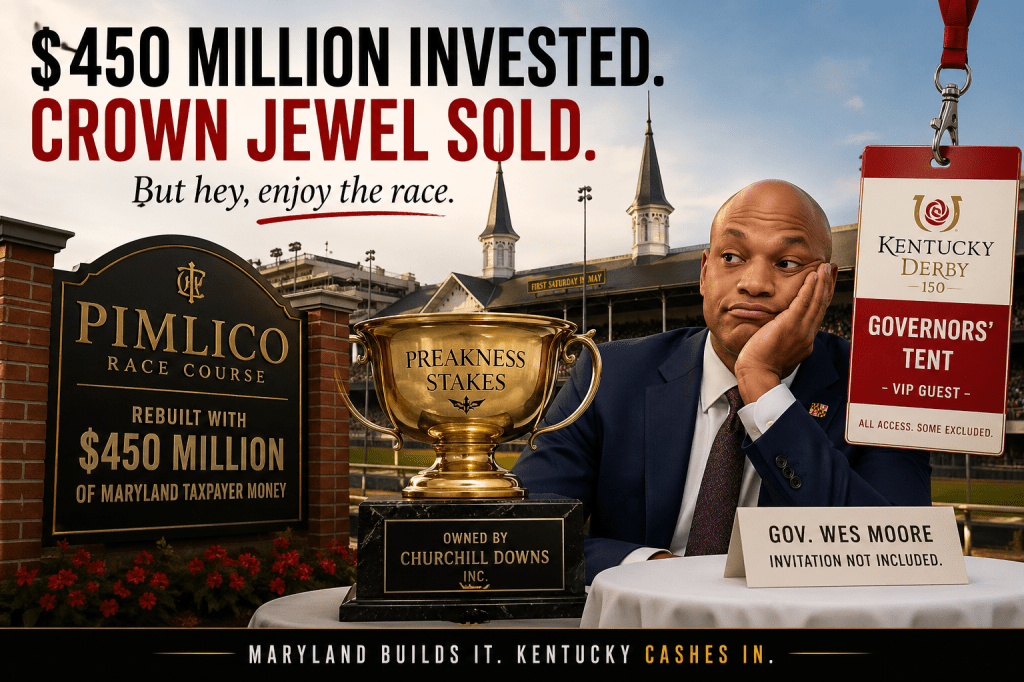
Maryland Spent $450 Million. Churchill Downs Bought the Crown Jewel. Moore Wasn’t Invited.
This Saturday, Democratic governors from four states will attend the Kentucky Derby, hosted by Kentucky’s Governor Beshear. Notably absent is Maryland’s Governor Wes Moore, who is kicking off his reelection campaign in Maryland. The situation raises questions about party optics and the financial relationship between Maryland and Churchill Downs.
-
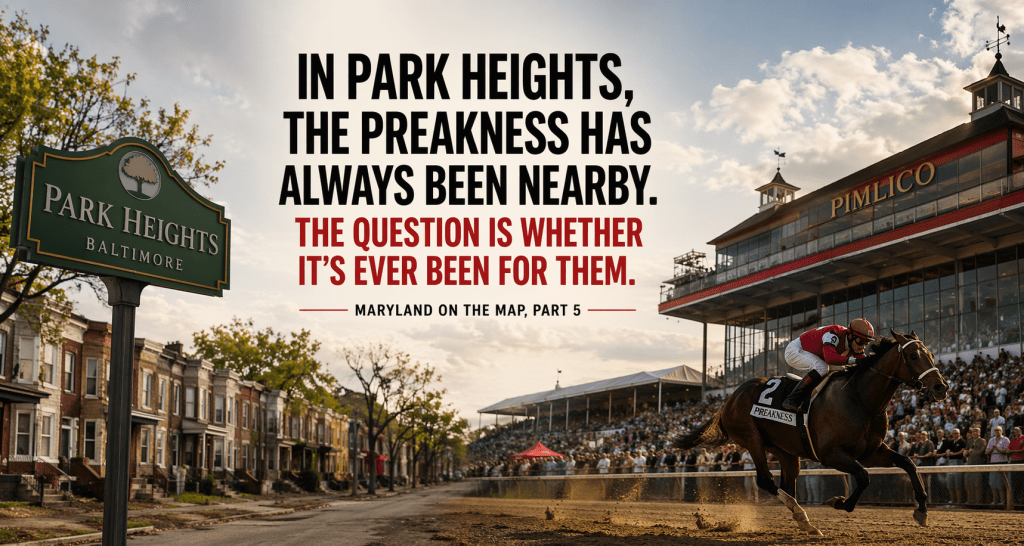
In Park Heights, the Preakness Has Always Been Nearby. The Question Is Whether It’s Ever Been For Them.
The Pimlico redevelopment in Park Heights, Maryland, aims to transform the racetrack’s relationship with its distressed community, promising benefits after years of broken promises. Historically, race day has harmed local businesses, leading to skepticism among residents. With a $400 million investment, stakeholders hope to create lasting positive changes, but challenges remain.
-
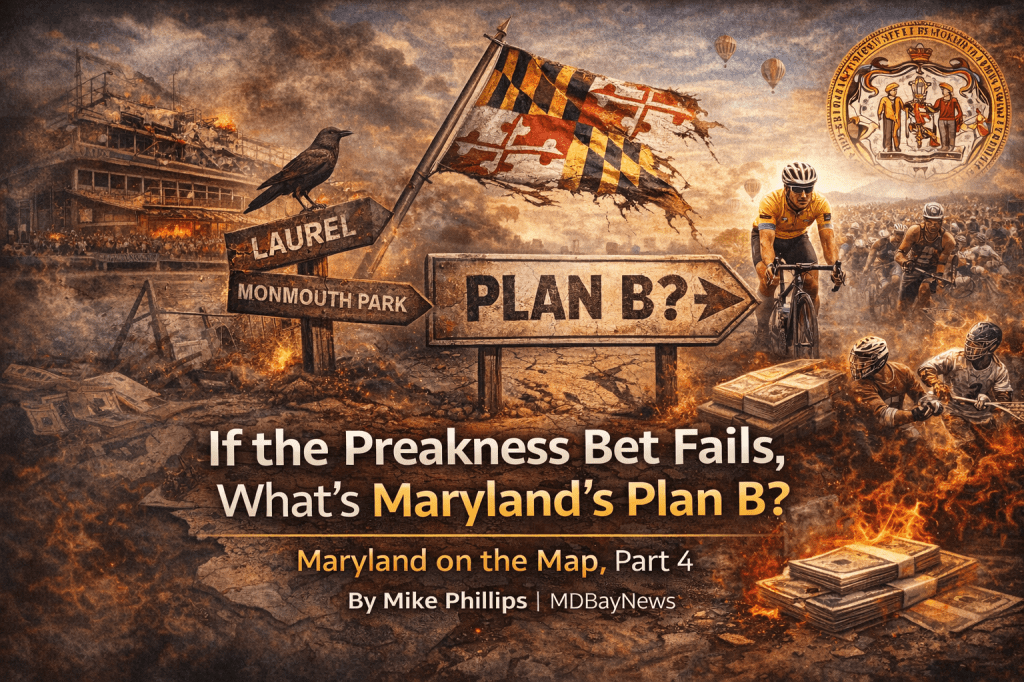
If the Preakness Bet Fails, What’s Maryland’s Plan B?
Maryland’s $400 million investment in Pimlico aims to preserve the Preakness but lacks a broader strategic vision for sports. While other events like the CIAA Tournament and Maryland Cycling Classic show economic potential, Maryland should develop diverse sporting identities, including lacrosse and sailing, to enhance its public profile and economy.
-
What $400 Million Bought: Mapping the Prestige Gap Between the Masters, the Derby, and the Preakness
The Preakness Stakes faces significant challenges compared to the Kentucky Derby and The Masters, particularly in terms of viewership, economic impact, and event prestige. Maryland has invested heavily in Pimlico’s renovation, but to close the gap, it must enhance broadcast investment and transform Preakness week into a major destination, fostering year-round revenue.

